
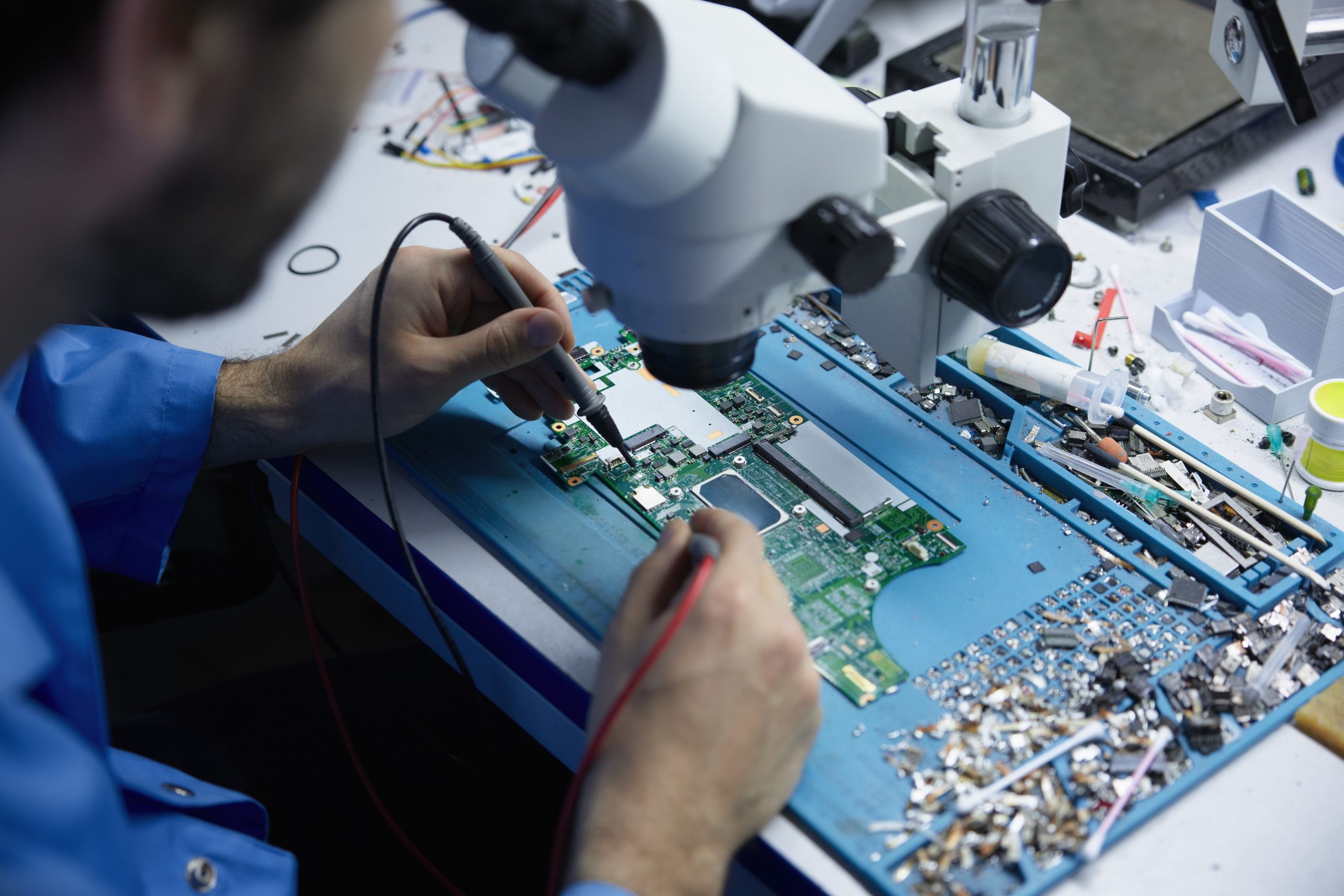
Root Cause Analysis for Network Equipment Failures: Why Repair Insight Matters
For organisations managing large estates of telecoms and network equipment, particularly asset managers, operations teams, and service delivery leads, hardware failure is unavoidable. Equipment operates in challenging environments, often under constant load and well beyond its original design life.
The real challenge is not simply repairing failed hardware, but understanding why network equipment fails and whether those failures can be prevented in the future. This is where root cause analysis for network equipment failures becomes critical.
Too often, network equipment repair is treated as a series of isolated events. A unit fails, it is returned, repaired or replaced, and redeployed. Service is restored, but the underlying cause of failure often remains unaddressed.
The hidden cost of repeat network equipment failures
Every network equipment failure carries a cost that goes far beyond the repair itself. Downtime affects service availability. Engineers are diverted from planned work. Spares are tied up in transit or written off entirely. Customer confidence is eroded.
When the same equipment fails repeatedly, these costs escalate quickly. What is initially assumed to be a hardware defect is often linked to other factors, including thermal stress, power quality issues, contamination, vibration, installation practices, or handling during transport and storage.
In many cases, the visible fault is only the final symptom, not the root cause.
Why volume and trend analysis matter in telecoms repair
Effective root cause analysis for network equipment failures rarely comes from examining individual repairs in isolation. It becomes meaningful when failures are analysed in volume and over time.
When hundreds or thousands of devices pass through a telecoms equipment repair process, patterns begin to emerge. Certain components show consistently higher failure rates. Some faults align with early-life failures, while others clearly sit in the wear-out phase of the asset lifecycle. Environmental correlations also become visible, such as increased failure rates at high-temperature sites or locations with unstable power.
This level of insight is difficult to achieve when equipment is simply returned to the manufacturer one unit at a time with limited feedback.
Working with Comtek, an independent repair provider, changes the dynamic. By analysing network equipment repair services across multiple sites, regions, and operating conditions, we can provide insight into why equipment is failing, not just how to restore it to service.
Turning repair data into preventative maintenance
Repair data is often underused. When analysed properly, it becomes a practical tool for preventative maintenance and asset lifecycle management rather than a historical record of faults.
In practice, this insight supports targeted intervention, including:
- Replacing not only failed components, but also parts that have demonstrated higher failure rates over time
- Identifying environmental or operational conditions that accelerate component degradation
- Refining spares strategy based on observed failure behaviour rather than assumptions
- Working with customer engineering teams to introduce preventative measures, such as changes to installation, cooling, power protection, or handling processes
- Running structured refurbishment programmes to stabilise ageing network equipment and reduce unplanned outages
The objective is to reduce repeat failures and improve long-term reliability, not simply to shorten repair turnaround times.
Closing the loop between repair and operations
One of the most valuable outcomes of root cause analysis is the feedback loop it creates between repair and operations. Insights gained from network equipment repair can inform how equipment is deployed, maintained, stored, and transported across the estate.
For many organisations, this is the point where repair stops being a reactive function and starts influencing broader asset and service strategy. Small, informed changes can materially extend equipment life and improve service stability.
What asset and engineering teams should expect from a repair partner
A capable network equipment repair partner should do more than return working hardware. They should provide visibility into failure behaviour, challenge assumptions, and support preventative decision-making.
In an environment where OEM support is increasingly expensive or unavailable, extending asset life has become both an engineering and commercial necessity. Preventative maintenance driven by real repair insight is almost always cheaper and less disruptive than repeated reactive fixes.
Root cause analysis for network equipment failures, backed by real repair data and experience, turns network equipment repair into a continuous engineering feedback loop. It works best when repair partners and customer teams collaborate, share insight, and focus on long-term reliability.
If the same equipment keeps coming back, it is usually pointing to a deeper issue. Understanding those patterns is often the first step towards a more effective and sustainable way of managing network assets.
Want to understand why the same equipment keeps failing?
You can email us at info@comtek.group or use our contact form to start a conversation.